Every orthodontist is a dentist, but not every dentist is an orthodontist, and understanding this distinction helps explain why certain dental needs are referred to a specialist rather than treated in a general practice. Dentists provide broad oral healthcare, covering everything from routine cleanings and fillings to gum health and general tooth maintenance, while orthodontists complete additional years of specialised training focused specifically on diagnosing and correcting the position of teeth and jaws. Knowing when each professional’s expertise is most relevant can make it easier to seek the right kind of care at the right time.
Key takeaways
- Orthodontists are dentists who complete years of additional specialised training after dental school.
- General dentists handle broad oral health needs, from checkups and fillings to overall gum care.
- Orthodontists focus specifically on diagnosing and correcting tooth and jaw alignment issues.
- Dentists often identify alignment concerns first and refer patients to an orthodontist when needed.
- Many people benefit from ongoing general dental care alongside orthodontic treatment at the same time.
What Does a General Dentist Actually Do?
A general dentist serves as the primary provider for a wide range of everyday oral healthcare needs, including routine check-ups, professional cleanings, fillings, and monitoring overall oral health over time. This broad scope makes general dentists the first point of contact for most dental concerns, since they are trained to diagnose and treat a wide variety of issues affecting teeth, gums, and the surrounding structures of the mouth.
Beyond routine care, general dentists also handle restorative treatments such as crowns and root canals, provide guidance on oral hygiene practices, and monitor for early signs of conditions like gum disease or decay during regular visits. Because they see patients consistently over time, general dentists are often well positioned to notice gradual changes in a person’s oral health, including early signs of alignment issues that might benefit from specialist evaluation.
What Additional Training Does an Orthodontist Complete?
After completing dental school and earning the same foundational qualifications as a general dentist, orthodontists go on to complete an additional multi-year residency program focused specifically on the diagnosis, prevention, and correction of misaligned teeth and jaws. This additional training covers the biomechanics of tooth movement, growth and development of the jaw and facial structures, and the design and management of various appliances used to guide teeth into improved positions.
This specialised education means orthodontists develop a depth of expertise in areas like bite correction, jaw alignment, and the long term stability of tooth movement that goes well beyond what is typically covered during general dental training. This is why orthodontic treatment, even when it appears to involve something as simple as straightening a few crowded teeth, is generally best managed by someone with this specific additional training.
What Kinds of Issues Does an Orthodontist Specifically Address?
Orthodontists focus on correcting misalignment issues such as crowded or spaced teeth, overbites, underbites, crossbites, and other irregularities in how the upper and lower teeth meet when biting down. They also address jaw alignment concerns that can affect not just appearance but also function, including how efficiently a person can chew and how evenly biting forces are distributed across the teeth.
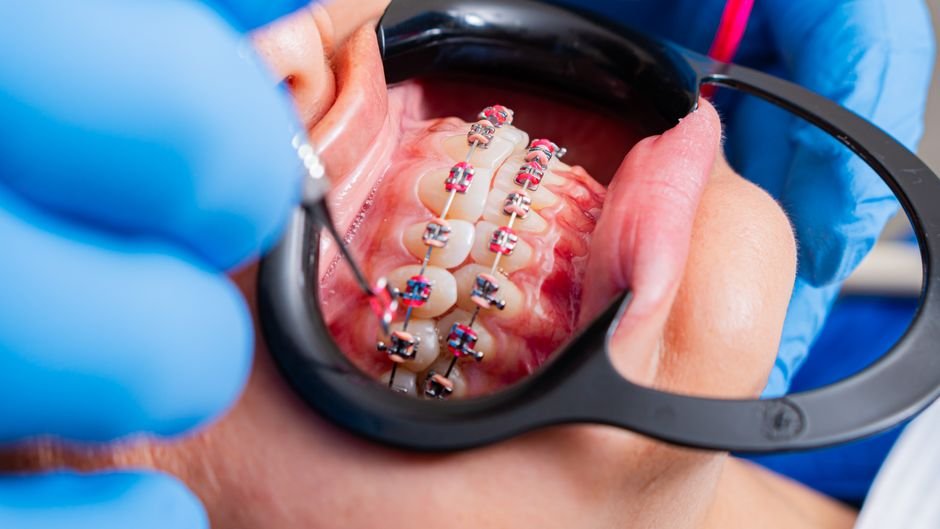
Treatment approaches vary considerably depending on the specific issue and a patient’s age, ranging from traditional braces and clear aligners to more specialised appliances designed to guide jaw growth in younger patients whose bone structure is still developing. Because orthodontic treatment often unfolds over an extended period, orthodontists also manage the ongoing adjustments and monitoring needed to keep treatment progressing as planned.
When Would a Dentist Refer Someone to an Orthodontist?
General dentists routinely check for early signs of alignment issues during regular examinations, even when a patient has not raised any specific concern about how their teeth look or fit together. If a dentist notices crowding, an irregular bite pattern, or a jaw alignment concern that falls outside the scope of general dental care, they will typically recommend a referral to an orthodontist for a more specialised evaluation.
This referral relationship allows patients to benefit from focused orthodontic expertise for alignment-specific concerns while continuing their regular general dental care with their existing dentist. In many cases, an orthodontic evaluation is recommended proactively for children around a certain age, even before any obvious problem is apparent, since early assessment can sometimes make later treatment simpler if any issue does develop.
Can a General Dentist Provide Orthodontic Treatment Too?
Some general dentists do offer basic orthodontic services, particularly for relatively straightforward cases involving mild crowding or simple clear aligner treatment, especially as training and technology in this area have become more accessible. However, this typically represents a narrower scope of orthodontic care compared to the full range of complex alignment and jaw-related issues an orthodontist is trained to manage.
For more involved cases, such as significant bite discrepancies, jaw alignment issues, or situations requiring careful management of growth in younger patients, the additional specialised training an orthodontist has completed becomes particularly valuable. Discussing the complexity of a specific situation with a dentist can help determine whether general dental orthodontic services are appropriate or whether a referral to a specialist would be more suitable.
Does Age Affect Which Professional Is Most Appropriate?
Orthodontic concerns can arise at any age, but the approach to treatment often differs depending on whether a patient’s jaw and facial structures are still growing. In children, orthodontists frequently focus on guiding growth and development, sometimes using specific appliances designed to influence how the jaw develops over time, which requires understanding of paediatric growth patterns.
Adult orthodontic treatment, by contrast, works within an already fully developed jaw structure, focusing more specifically on tooth movement and bite correction without the growth-guidance element relevant to younger patients. Both age groups benefit from an orthodontist’s specialised training, though the specific techniques and treatment planning considerations can differ meaningfully between paediatric and adult cases.
How Do Dentists and Orthodontists Work Together During Treatment?
Even while undergoing orthodontic treatment, patients typically continue seeing their general dentist for routine cleanings, cavity checks, and overall oral health monitoring, since orthodontic treatment addresses alignment specifically rather than replacing the need for general preventive care. This means both professionals often play an ongoing, complementary role throughout the course of treatment.
Clear communication between a patient’s general dentist and orthodontist can be particularly valuable, since braces or aligners can make thorough cleaning more challenging in certain areas, requiring extra attention during general dental visits to prevent decay or gum inflammation from developing around orthodontic appliances. This collaborative approach helps ensure that alignment goals are achieved without compromising overall oral health along the way.
How Can Someone Decide Whether They Need to See an Orthodontist?
Signs that might prompt a conversation about orthodontic evaluation include visibly crowded or gapped teeth, difficulty biting or chewing comfortably, a jaw that clicks or feels strained, or noticeable asymmetry in how the upper and lower teeth meet. However, some alignment issues are subtle enough that they are only identified during a professional examination rather than being obvious in daily life.
The most straightforward path is typically to raise any concerns during a regular check-up with a general dentist, who can assess whether the issue falls within routine dental care or would benefit from a specialist’s evaluation. This ensures that any recommended orthodontic treatment is genuinely appropriate for the specific concern rather than being pursued unnecessarily.
Frequently Asked Questions
Do I need a referral from my dentist to see an orthodontist?
In many cases, a direct consultation with an orthodontist can be scheduled without a formal referral, though a dentist’s observation during a routine check-up is often what prompts the initial recommendation. Either path is a reasonable way to begin exploring orthodontic evaluation.
At what age should a child first see an orthodontist?
Many orthodontists recommend an initial evaluation around seven years of age, even if no obvious problem is present, since this allows early identification of developing issues while there is still flexibility to guide growth if intervention becomes necessary.
Can adults still benefit from orthodontic treatment?
Yes, orthodontic treatment is not limited to children or teenagers, and many adults pursue treatment to address alignment concerns or bite issues at any stage of life, using options such as traditional braces or clear aligners suited to adult lifestyles.
Should I stop seeing my regular dentist while undergoing orthodontic treatment?
No, continuing regular visits with a general dentist during orthodontic treatment is important, since braces or aligners can make certain areas more challenging to clean, and ongoing preventive care helps protect against decay or gum issues throughout treatment.
Is orthodontic treatment only about appearance?
No, while improved appearance is often a noticeable benefit, orthodontic treatment also addresses functional concerns such as uneven bite forces, chewing difficulty, and jaw strain, which can have meaningful long term effects on oral health beyond aesthetics alone.

Matthew is a dental content writer passionate about helping readers understand their oral health, one article at a time.