
Sugar’s effect on teeth has less to do with total quantity consumed and more to do with how often teeth are exposed to it throughout the day. Every time sugar interacts with bacteria in the mouth, it triggers an acid attack on enamel that lasts around twenty minutes. Making a few thoughtful swaps in daily habits, rather than attempting a complete overhaul, can meaningfully reduce this cumulative exposure without requiring anyone to give up enjoying food and drink altogether.
Key takeaways
- Frequency of sugar exposure matters more for dental health than total amount consumed.
- Simple swaps, like choosing water over sugary drinks, reduce cumulative acid attacks on enamel.
- Pairing sugary foods with meals rather than spacing them out limits total exposure time.
- Some swaps, like sugar-free gum, can actively support saliva’s natural protective function.
- Small, sustainable changes tend to be more effective long term than strict, short-lived restrictions.
Why Does Frequency Matter More Than Total Sugar Intake?
Each time sugar is consumed, the bacteria in dental plaque use it to produce acid that attacks tooth enamel for roughly twenty minutes afterward. Someone who sips a sugary drink slowly over an hour is exposing their teeth to many more of these acid attacks than someone who consumes the same amount of sugar quickly in one sitting.
This is why dental professionals often emphasise limiting how often sugar is consumed throughout the day, rather than focusing purely on the total quantity. Concentrating sugar intake into fewer, more defined windows gives the mouth’s natural recovery process more consistent time to work between exposures.
What’s a Simple Swap for Sugary Drinks?
Replacing sugary sodas, juices and sweetened coffee drinks with water, or unsweetened alternatives, is one of the most impactful swaps available, since sugary drinks are often sipped slowly over extended periods, maximising the duration of acid exposure. Water, by contrast, actively helps rinse the mouth rather than contributing to the problem.
For anyone who finds plain water unappealing, infusing it with a small amount of fresh fruit or herbs can add flavour without the same sugar load. Sparkling water without added sugar is another reasonable alternative, though it’s worth being mindful of its mild acidity in very frequent consumption.
How Can Snack Timing Reduce Sugar’s Impact?
Pairing sugary snacks with main meals, rather than eating them as standalone snacks between meals, is a simple but effective swap. Saliva production increases naturally during meals, helping to buffer the acid produced by sugar more effectively than when sugar is consumed in isolation during a quiet moment between meals.
This approach doesn’t require eliminating treats entirely, just being more intentional about when they’re eaten. Saving a dessert for after dinner, for example, exposes teeth to less prolonged risk than the same treat eaten alone mid-afternoon when saliva flow is comparatively lower.
Are There Better Alternatives to Sticky, Chewy Sweets?
Sticky and chewy sweets, like gummy candies or dried fruit, tend to cling to tooth surfaces and remain in contact with enamel far longer than sweets that dissolve or clear from the mouth more quickly. This extended contact time significantly increases the duration of acid exposure compared to other sugary options.
Choosing sweets that clear the mouth more readily, such as a small square of chocolate that melts relatively quickly, can be a reasonable swap for anyone looking to reduce prolonged sugar contact without giving up sweets altogether. Following any sweet with a glass of water also helps clear residual sugar more effectively.
Can Sugar-Free Gum Genuinely Help?
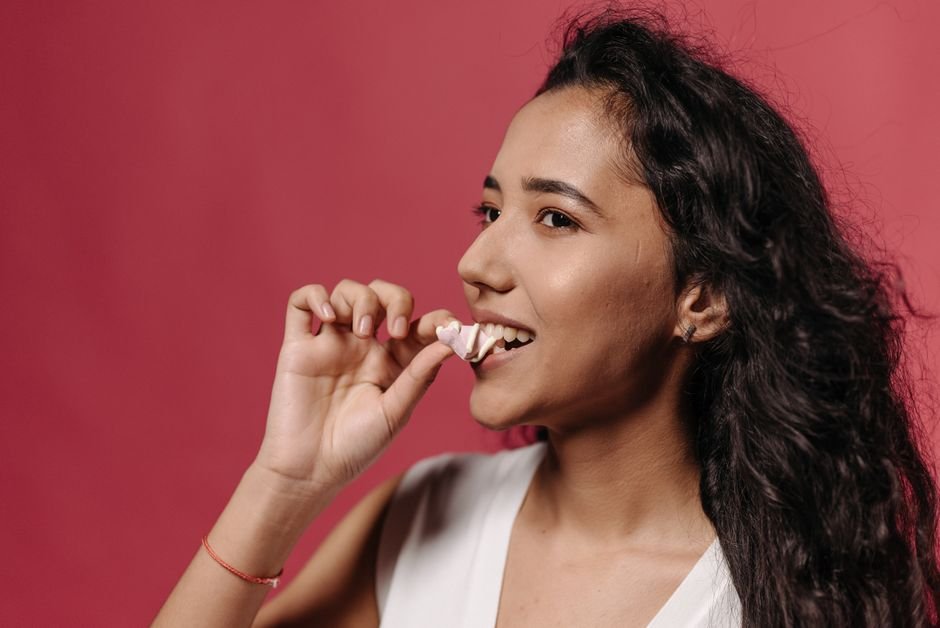
Chewing sugar-free gum after eating stimulates saliva production, which helps neutralise the acid produced by any sugar consumed and supports the natural remineralisation of enamel. This makes it a genuinely useful, low-effort swap for the period right after a meal or snack when acid activity in the mouth is at its highest.
Gums containing xylitol, a sugar substitute that doesn’t feed decay-causing bacteria in the same way regular sugar does, are often specifically recommended for this purpose. This small habit fits easily into most daily routines without requiring any significant lifestyle change.
How Does Breakfast Choice Affect Sugar Exposure?
Many popular breakfast options, including sweetened cereals, pastries and flavoured yoghurts, carry a surprising amount of added sugar, often consumed first thing in the morning before the mouth has had much saliva flow to help manage it. Swapping toward options like plain yoghurt with fresh fruit or whole grain toast can meaningfully reduce this early exposure.
Starting the day with lower sugar exposure also tends to set a helpful tone for the rest of the day’s eating pattern, since breakfast choices often influence the type of snacking that follows later on.
What About Swapping Sauces and Condiments?
Sauces and condiments, such as ketchup, barbecue sauce and certain salad dressings, often contain more added sugar than people expect, and because they’re used frequently and in small amounts throughout meals, they can quietly contribute to cumulative sugar exposure without being an obvious focus of attention.
Checking labels and choosing lower-sugar versions where available, or simply using smaller portions of these condiments, is a subtle but meaningful swap. This kind of attention to less obvious sugar sources often makes a bigger difference than people initially expect.
How Can Families Make These Swaps Sustainable for Children?
Introducing swaps gradually, rather than removing all sugary favourites at once, tends to be more sustainable for children and helps avoid the kind of resistance that comes with feeling suddenly restricted. Involving children in choosing alternatives, such as picking their preferred fruit for infused water, can also improve buy-in.
Modelling these swaps as a parent, rather than only enforcing them for children, reinforces the habit as a normal part of family life rather than a punishment. Children are generally more receptive to dietary changes they see reflected consistently in the adults around them.
Do These Swaps Replace the Need for Good Oral Hygiene?
Dietary swaps that reduce sugar exposure work best as a complement to, not a replacement for, consistent brushing and flossing. Even with thoughtful dietary choices, some sugar exposure is a normal part of most diets, and daily oral hygiene remains essential for managing the plaque and bacteria that produce acid in the first place.
Thinking of dietary swaps and oral hygiene as two parts of the same overall strategy, rather than alternatives to one another, tends to produce the best results. Neither approach alone is as effective as the two working together consistently over time.
How Does Drink Temperature and Type Affect the Impact of Sugar?
Cold, sugary drinks consumed quickly tend to have less prolonged contact with teeth than warm sugary drinks, like sweetened tea or coffee, which are often sipped slowly over an extended period. This slower consumption pattern extends the window of acid exposure considerably, even if the total sugar content is similar between the two.
Swapping a slowly-sipped sweetened hot drink for a quickly consumed alternative, or reducing added sugar gradually over time to retrain taste preferences, can help reduce this extended exposure. Small, gradual reductions tend to be more sustainable than an abrupt switch to an unsweetened version that feels like a significant change all at once.
Frequently Asked Questions
Is natural sugar, like that found in fruit, less harmful to teeth?
Natural sugars can still trigger the same acid-producing process in the mouth as added sugars. However, whole fruit also contains fibre and water that can help offset some of this effect compared to concentrated sugary snacks or drinks.
How long after eating sugar does the acid attack on enamel last?
The acid attack triggered by sugar consumption typically lasts around twenty minutes after exposure. This is why frequent snacking throughout the day can create near-constant acid activity compared to sugar consumed within a defined meal window.
Can rinsing with water after eating sugar make a real difference?
Yes, rinsing with water helps clear residual sugar and food particles from the mouth, reducing the fuel available for bacteria to produce acid. It’s a simple, immediate step that complements regular brushing and flossing.
Are sugar substitutes always a safe swap for dental health?
Most sugar substitutes used in sugar-free products, including xylitol, do not feed decay-causing bacteria in the same way as regular sugar. They are generally considered a reasonable swap when used as part of a balanced overall diet.
Do these swaps need to be permanent to be effective?
Consistency over time matters more than perfection. Making these swaps a regular part of daily habits, even with occasional exceptions, still meaningfully reduces cumulative sugar exposure compared to no changes at all.

Matthew is a dental content writer passionate about helping readers understand their oral health, one article at a time.