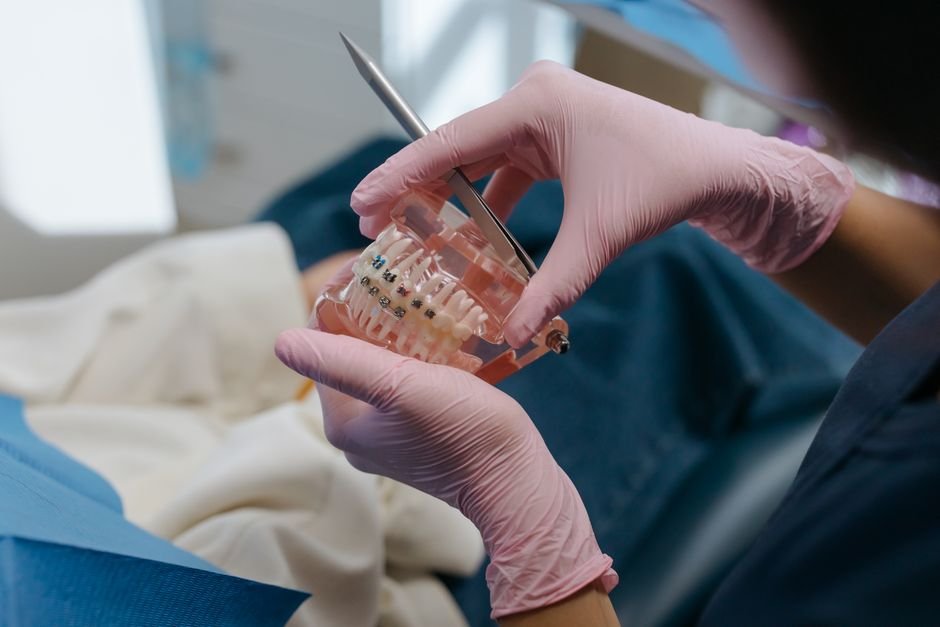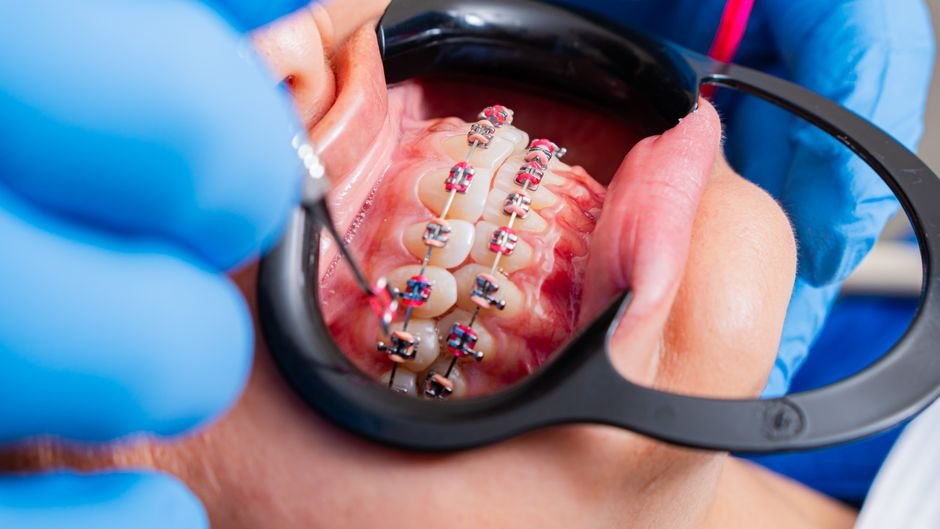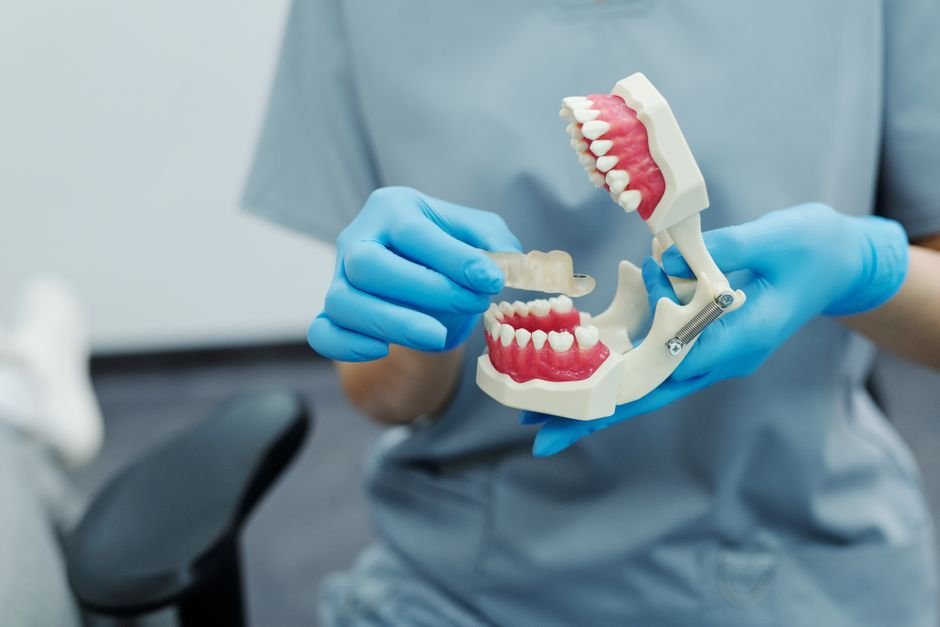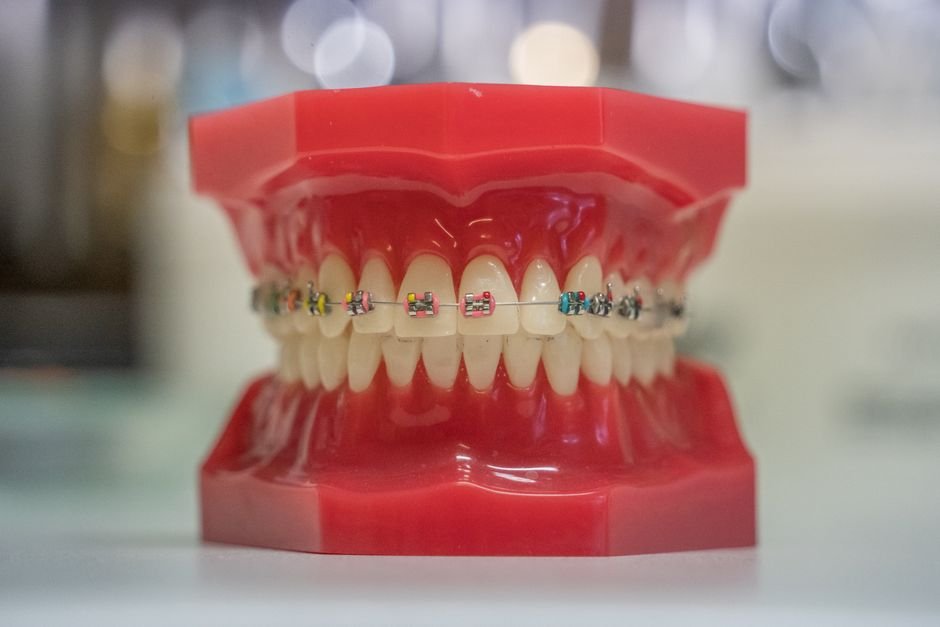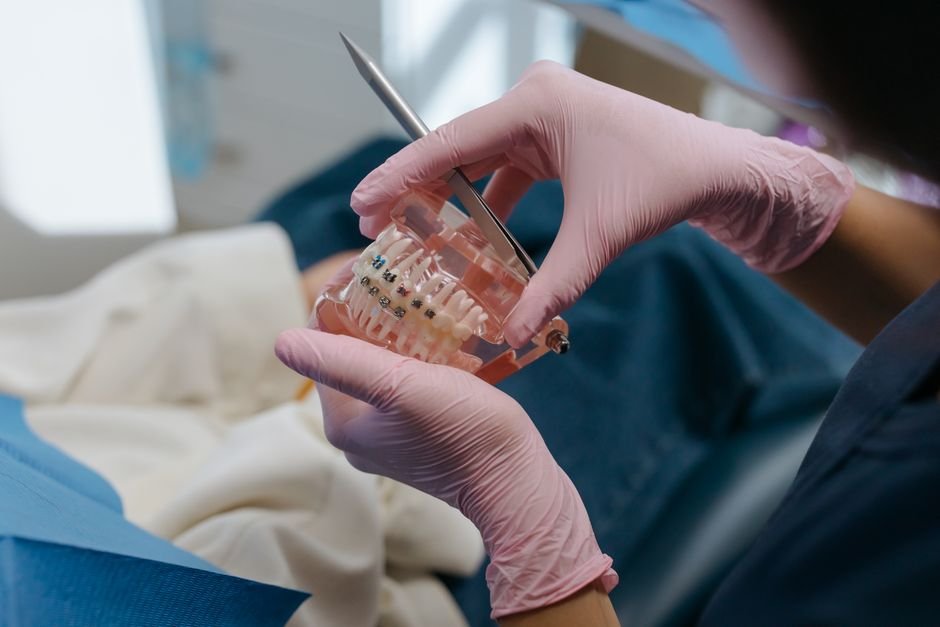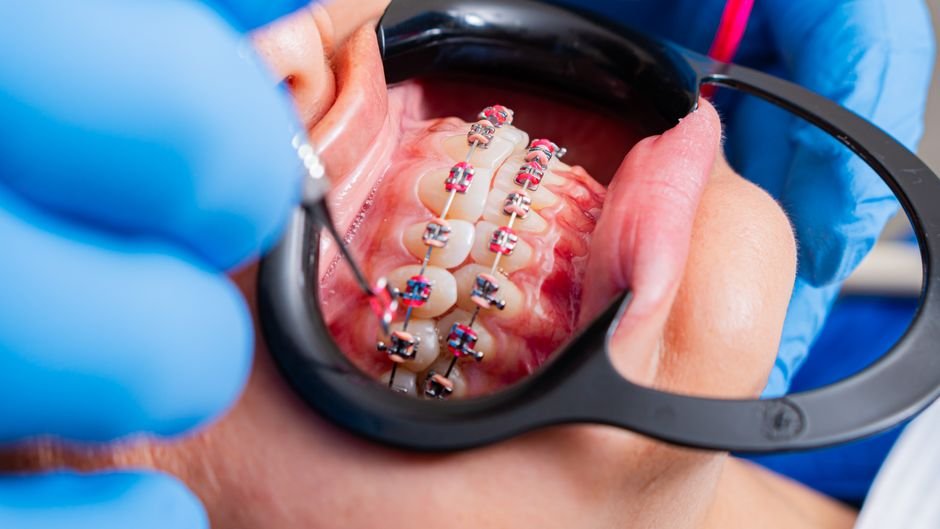
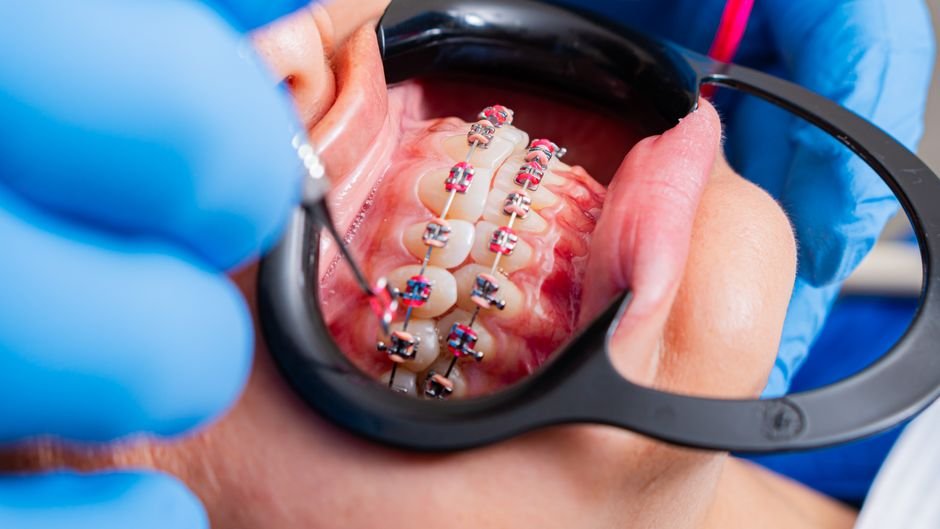
Orthodontic treatment supports long term jaw health by correcting how the upper and lower teeth meet, which allows the jaw joints and chewing muscles to work in a more balanced, evenly distributed way. When teeth are crowded, crossed, or misaligned, the jaw often has to shift, twist, or overwork to bring the teeth together for biting and chewing. Over years, this uneven strain can contribute to jaw joint discomfort, muscle fatigue, and accelerated tooth wear. Straightening the bite with braces, clear aligners, or other appliances helps the jaw close in a more natural, stable position, reducing unnecessary pressure on the joints and supporting more comfortable function for years to come.
Key takeaways
- A misaligned bite forces the jaw joints and muscles to compensate, which can lead to strain and discomfort over time.
- Orthodontic correction aligns the teeth so the jaw can close in a more natural, balanced position.
- Improved bite alignment supports more efficient chewing and reduces uneven wear on individual teeth.
- Correcting alignment early can help prevent the gradual build-up of muscular tension around the jaw and face.
- Long-term jaw comfort is closely linked to how evenly the bite forces are spread across the dental arch.
How Does a Misaligned Bite Affect the Jaw Joint?
The jaw joint, known as the temporomandibular joint, relies on a stable and even bite to move smoothly during talking, chewing, and swallowing. When teeth are crowded, rotated, or meet unevenly, the lower jaw is often nudged into a position that is not truly centred within the joint. This forces the joint to absorb pressure from an angle it was not designed to manage on a constant basis, which can gradually irritate the surrounding tissues.
Over months and years, this repeated misalignment can contribute to clicking, popping, or a feeling of tightness around the joint. While not every case of jaw discomfort stems from tooth alignment, an uneven bite is a recognised contributing factor. Orthodontic treatment addresses this by repositioning the teeth so the jaw can settle into a more consistent, centred closing pattern, reducing the repetitive strain placed on the joint itself.
What Is the Connection Between Teeth Alignment and Jaw Muscles?
The muscles that control jaw movement work as a coordinated team, and they rely on the teeth meeting evenly to know when to stop closing. When the bite is uneven, certain muscles have to contract harder or for longer to compensate, while others may be underused. This imbalance can lead to muscle fatigue, particularly around the temples, cheeks, and the sides of the jaw.
Persistent muscular overwork of this kind can contribute to tension that some people notice as tiredness in the jaw after eating or talking for extended periods. By aligning the teeth so they meet evenly across the dental arch, orthodontic treatment allows the chewing muscles to share the workload more evenly. This reduces the likelihood of certain muscle groups becoming chronically overworked, supporting more comfortable, sustainable jaw function over the long term.
How Does Orthodontic Treatment Improve Chewing Efficiency?
Chewing efficiency depends on the upper and lower teeth coming together in a way that allows food to be broken down effectively with minimal effort. When teeth are misaligned, certain areas of the mouth may do most of the work while others barely make contact during chewing. This uneven distribution means more force is often needed to process food properly, placing extra demand on both the muscles and the jaw joint.
Once orthodontic treatment brings the teeth into better alignment, chewing forces are spread more evenly across all the teeth and both sides of the mouth. This makes the entire chewing process more efficient, requiring less overall muscular effort to achieve the same result. Efficient chewing also supports better digestion, since food is broken down more thoroughly before swallowing, easing the workload placed on the digestive system further along.
Can Straightening Teeth Reduce Wear and Tear on Teeth?
Teeth that meet unevenly tend to concentrate biting force on a small number of contact points rather than spreading it across the whole arch. Over time, these concentrated pressure points can lead to noticeable wear, chipping, or flattening of the enamel on specific teeth. This uneven wear can also make individual teeth more sensitive or prone to small fractures as the protective enamel layer thins in those areas.
Orthodontic correction redistributes these forces so that no single tooth or small group of teeth bears a disproportionate share of the biting load. With the bite properly aligned, wear tends to occur more evenly and gradually across the entire dental arch, which is a far more sustainable pattern for long-term dental health. This even distribution helps preserve the natural structure of the teeth for longer.
What Role Does Orthodontics Play in Preventing Jaw Strain Over Time?
Jaw strain often develops gradually rather than appearing suddenly, building up from years of the jaw compensating for a bite that does not sit quite right. Small adjustments the jaw makes to accommodate crowded or misaligned teeth can become habitual, meaning the muscles and joint are placed under low-level but constant extra effort during everyday activities like eating and speaking.
By correcting the underlying alignment issue rather than only managing symptoms, orthodontic treatment addresses one of the root contributors to this gradual strain. With teeth guided into a more functional position, the jaw no longer needs to make those constant small compensations. This can make a meaningful difference to how the jaw feels during daily activities, particularly for people who chew frequently or speak for long periods as part of their routine.
How Does Bite Correction Support Overall Jaw Comfort?
Jaw comfort is closely tied to how predictably and evenly the jaw can open and close throughout the day. When the bite is stable and the teeth interlock properly, the jaw follows a consistent, well-supported path of movement. This predictability reduces the chance of the joint or surrounding muscles being placed under sudden or awkward loading during normal use.
Many people who complete orthodontic treatment for a significantly misaligned bite report that everyday actions such as chewing firmer foods or opening the mouth widely feel more comfortable afterwards. This is a natural consequence of the jaw no longer having to navigate around an uneven bite. Establishing this kind of stable, comfortable function early can help maintain jaw comfort well into later life.
Is Orthodontic Treatment Only About Appearance?
While straighter teeth are often the most visible outcome of orthodontic treatment, the functional benefits for the bite and jaw are just as significant, if not more so. Orthodontics is fundamentally about creating a bite where the upper and lower teeth work together properly, which has direct implications for chewing, speech, and the long-term health of the jaw joint and muscles.
Focusing only on the cosmetic result overlooks the structural improvements happening beneath the surface. A well-aligned bite distributes forces evenly, supports efficient chewing, and reduces unnecessary strain on the jaw. These functional gains tend to have a lasting impact on comfort and oral health, making orthodontic treatment a meaningful investment in long-term wellbeing rather than a purely aesthetic choice.
Why Does Early Assessment of Bite Alignment Matter?
The earlier a bite misalignment is identified, the more options are typically available for guiding the teeth and jaw into a healthier relationship. Some alignment issues become more established and harder to influence gently as the jaw finishes developing, meaning treatment may need to be more involved if it is delayed for many years.
Regular dental check-ups allow alignment issues to be spotted before they progress, giving a dental professional the opportunity to recommend orthodontic assessment at an appropriate stage. This does not mean every minor alignment quirk requires immediate treatment, but understanding the state of the bite early on allows for informed decisions. Addressing issues proactively often supports a smoother treatment process and more predictable long-term outcomes for jaw function.
What Happens to Jaw Health If Misalignment Is Left Untreated?
Leaving a significant bite misalignment unaddressed does not usually cause the jaw to compensate perfectly forever. Instead, the uneven forces and repeated small adjustments the jaw makes tend to accumulate gradually, and this pattern can continue for many years without drawing attention until discomfort or wear becomes more noticeable.
Over the long term, untreated misalignment may contribute to ongoing muscular tension, uneven tooth wear, and reduced comfort during everyday chewing and speaking. It can also make certain areas of the mouth harder to clean effectively, since crowded or overlapping teeth create spaces that are more difficult to reach with a toothbrush. Addressing bite alignment through orthodontic treatment helps prevent these issues from compounding further as time goes on.
Frequently Asked Questions
Does orthodontic treatment help with jaw pain?
Orthodontic treatment can help reduce jaw discomfort that stems from an uneven bite by correcting how the teeth meet, which allows the jaw joint and surrounding muscles to work in a more balanced way. It is not a guaranteed solution for every type of jaw discomfort, since other factors can also play a role, but correcting a misaligned bite is a recognised way to ease strain related to tooth alignment specifically.
How long does it take to notice jaw comfort improvements after orthodontic treatment?
Many people notice gradual improvements in jaw comfort as their bite becomes more balanced during treatment, though the exact timing varies from person to person depending on the extent of the original misalignment. Some notice subtle changes within the earlier stages of treatment, while more complete improvements often become apparent once the bite has fully settled after treatment is finished.
Can adults benefit from orthodontic treatment for jaw health, not just children?
Yes, adults can benefit from orthodontic treatment for jaw health in the same way as younger patients, since bite mechanics and the strain caused by misalignment work similarly at any age. While jaw bones are no longer growing in adulthood, teeth can still be repositioned effectively, and doing so can still meaningfully improve how evenly bite forces are distributed across the jaw.
Does correcting my bite reduce future dental wear and tear?
Correcting an uneven bite through orthodontic treatment typically helps distribute chewing forces more evenly across all the teeth rather than concentrating pressure on a few contact points. This more even distribution reduces the likelihood of premature wear, chipping, or flattening on specific teeth, supporting healthier tooth structure over the course of many years of normal use.
Is jaw strain always caused by misaligned teeth?
Not always, since jaw strain can also be influenced by habits such as clenching, general muscle tension, or other factors unrelated to tooth position. However, a misaligned bite is a well-established contributing factor for many people, and addressing it through orthodontic treatment is often one practical step towards reducing unnecessary strain on the jaw joint and surrounding muscles.

Matthew is a dental content writer passionate about helping readers understand their oral health, one article at a time.