
Children learn how to look after their teeth mainly by watching the adults around them, not by being lectured at. The single most effective way to build lasting oral health habits in a household is for parents and carers to visibly brush, floss, attend check-ups, and make sensible food choices themselves, turning good habits into a shared family routine rather than a rule imposed on children alone.
Key takeaways
- Children copy what they see, so a parent’s own brushing and flossing habits matter more than instructions.
- Brushing together as a family routine makes the habit automatic rather than a daily negotiation.
- Attending dental visits as a family unit helps normalise check-ups and reduces anxiety.
- Consistency, not perfection, is what builds habits that last into adulthood.
- Letting children choose their own toothbrush and toothpaste builds a sense of ownership over their own care.
Why do children copy the oral care habits they see at home?
Young children learn through observation long before they can follow verbal instructions with any real understanding. When they watch a parent or older sibling brush their teeth twice a day without fuss, that behaviour registers as simply “what people do” rather than a chore to be resisted. This is why household routines tend to be far more persuasive than posters, reminder charts, or repeated verbal prompts. A child who has never seen an adult skip brushing has no template for skipping it themselves.
This modelling effect extends beyond the bathroom sink. The way adults talk about dental visits, react to a filling, or discuss sugary snacks all feed into a child’s internal sense of what is normal and unremarkable. If oral care is treated matter-of-factly at home, children tend to absorb that same calm attitude. Conversely, if adults express dread about the dentist or treat brushing as an afterthought, children pick up on that tone just as readily as they pick up the actual technique.
How can brushing and flossing become a family routine rather than a chore?
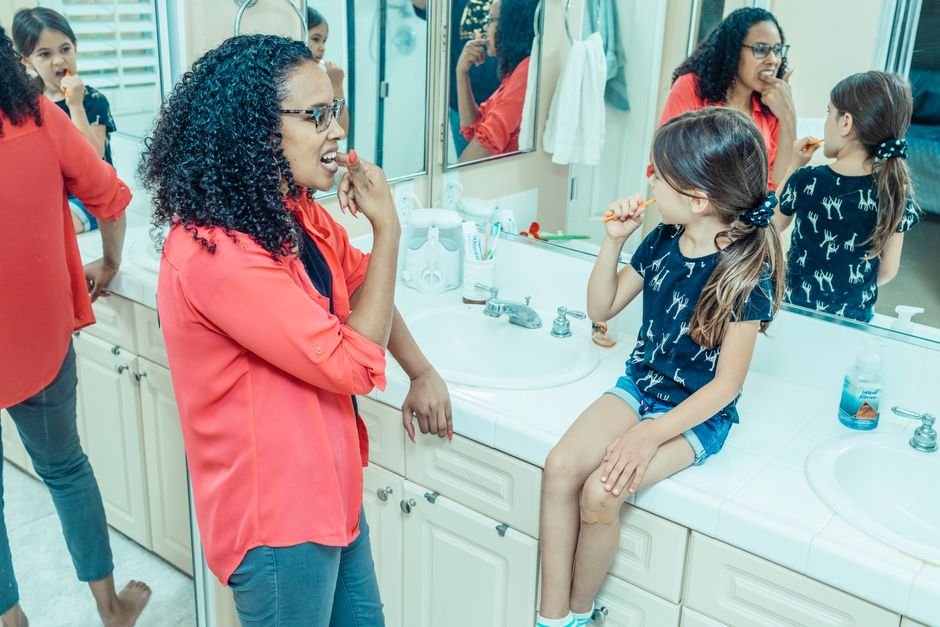
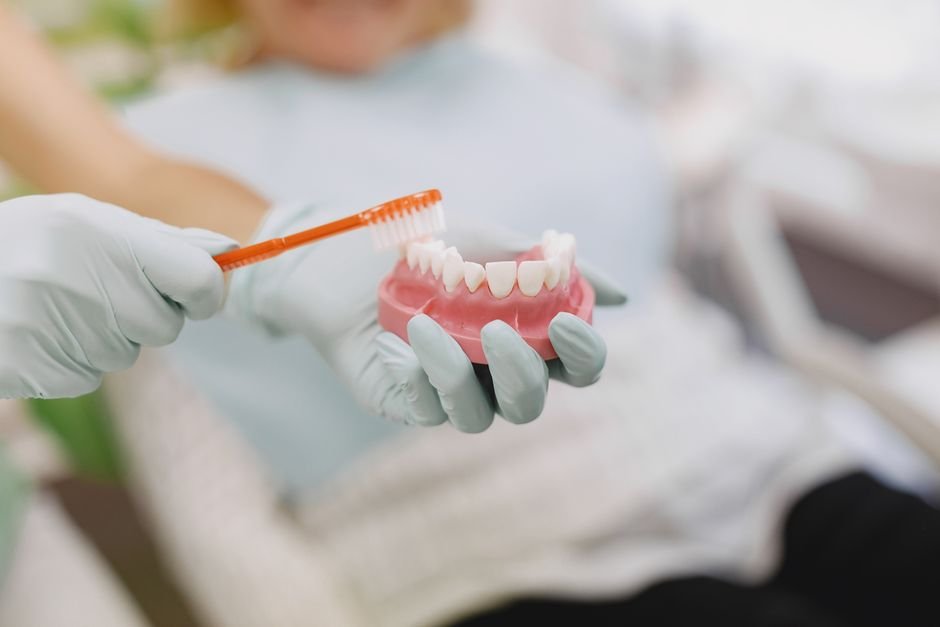
One of the simplest shifts a household can make is turning brushing and flossing into something done together at a set time, rather than something each person does separately and inconsistently. A shared morning and evening routine, even just standing side by side at the basin for two minutes, removes the sense that oral care is a solitary obligation. It also gives parents a natural opportunity to demonstrate proper technique without turning it into a formal lesson.
Flossing tends to be the habit most easily dropped, by adults and children alike, simply because it is treated as optional or an afterthought. Building it into the same shared routine as brushing, rather than as a separate and easily skipped step, helps it stick. Playing a short song, using a two-minute timer, or simply chatting while brushing keeps the routine pleasant rather than rushed, which matters far more for consistency than any single perfect brushing session.
How do family dental visits help make check-ups feel normal?
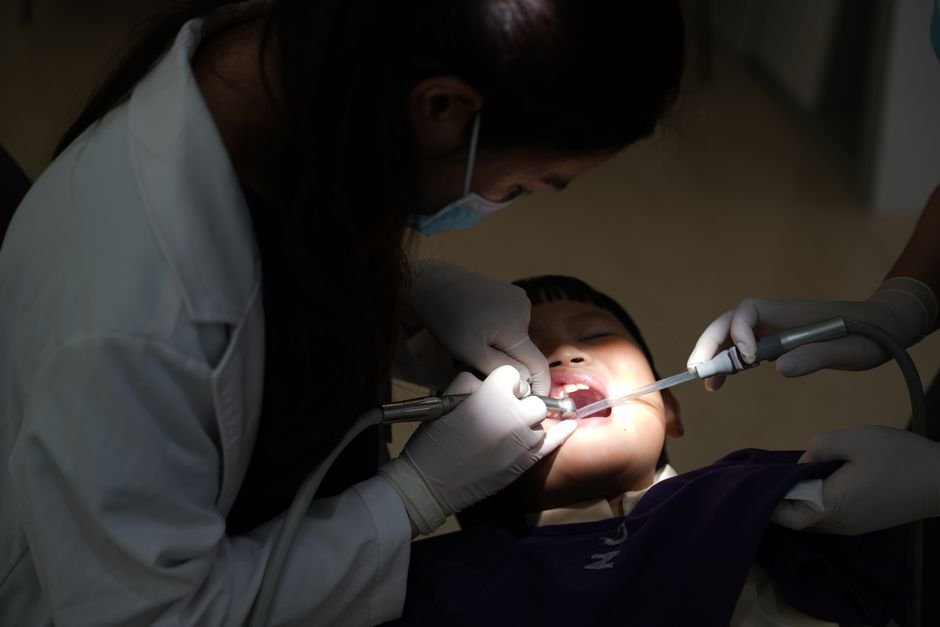
Dental anxiety in children is often less about the visit itself and more about the unfamiliarity and uncertainty surrounding it. When a whole family attends check-ups around the same period, even if appointments are booked separately, children see that visiting the dentist is a routine part of life for everyone, not a special or worrying event reserved for them. Sitting in the waiting room alongside a parent who is there for their own check-up quietly reinforces that this is simply something people do.
Where possible, letting a younger sibling sit in during part of an older child’s straightforward check-up can also help demystify the experience well before their own first visit. Talking about the visit afterwards in plain, neutral terms, rather than avoiding the subject or over-explaining it, keeps the tone matter-of-fact. The goal is not to make dental visits exciting, simply unremarkable, which is often the most realistic and achievable outcome for reducing anxiety.
How should families talk about food and drink choices without creating anxiety?
Conversations about sugary food and drink can easily tip into guilt or restriction if they are not handled carefully, and this can backfire by making children secretive about what they eat or anxious around mealtimes. A more effective approach is to frame choices in terms of everyday habits rather than good versus bad foods. For example, talking about which drinks are fine as an occasional treat alongside meals, rather than banning them outright, tends to produce calmer, more sustainable behaviour over time.
Rather than singling out a child’s snack choices, it helps to talk about the whole family’s approach to food and drink, including what is kept in the house and when treats are enjoyed. Timing matters too: sugary or acidic foods and drinks are generally less harmful to teeth when eaten alongside a main meal rather than sipped or snacked on throughout the day. Framing this as a shared household pattern, rather than a rule applied only to children, avoids singling anyone out.
Why does consistency from parents and carers matter more than intensity?
A single thorough brushing session or one particularly health-conscious week rarely has much lasting effect on oral health. What matters far more is the steady repetition of reasonable habits over months and years. Children absorb consistency as a signal of importance; a routine that happens every single day, even briefly, teaches more than an occasional deep clean or a strict rule that is only sometimes enforced.
This is particularly relevant for busy households where routines can slip during holidays, illness, or simply tiring days. Rather than aiming for an unattainable standard of perfection, it helps to focus on maintaining the basic routine even in a shortened or imperfect form, such as a quick brush rather than none at all. Over time, this reliable baseline does more for a child’s long-term habits than any occasional burst of extra effort followed by weeks of inconsistency.
How should a missed brushing night or a cavity be handled without shame?
Occasional lapses are a normal part of family life, and how they are handled matters as much as the lapse itself. A missed brushing night, a forgotten flossing session, or even a cavity that needs treatment should be addressed calmly and practically rather than treated as a failure or a reason for blame. Children who associate dental setbacks with shame are more likely to hide problems, avoid mentioning discomfort, or develop anxiety around future check-ups.
Instead, framing a cavity or a missed routine as simply something to address and move on from keeps the household’s relationship with oral health practical rather than emotionally charged. Explaining, in age-appropriate terms, why a filling is needed and what happens next, without dramatising it, models a healthy and resilient attitude towards dental care. This approach also makes children more likely to speak up early about pain or sensitivity, rather than concealing it out of worry.
Why does letting children choose their own toothbrush and toothpaste help?
Giving children some choice over their own oral care tools, such as picking a toothbrush in a favourite colour or a toothpaste flavour they enjoy, builds a small but meaningful sense of ownership over the routine. When a child feels that brushing is something they have chosen to be part of, rather than something done to them, engagement tends to improve noticeably. This is a simple, low-cost way to shift the dynamic from obligation to participation.
This sense of ownership can be extended as children get older, letting them take more responsibility for remembering their own routine, choosing when to floss within the family’s set times, or picking out a replacement brush when the bristles wear down. Involving them in these small decisions, while parents still oversee the overall standard, helps build the independence that will eventually be needed when they are managing their own oral care without supervision.
How does the whole household benefit when one person commits to better habits?
Oral health habits rarely stay contained to a single family member. When one adult in a household commits to a more consistent brushing and flossing routine, or becomes more relaxed and matter-of-fact about dental visits, that shift tends to ripple outward to everyone else living in the same home. Shared routines, shared bathroom habits, and shared conversations about food mean that one person’s improved consistency naturally raises the baseline for the whole family.
This ripple effect is particularly noticeable with children, who are far more responsive to a parent’s changed behaviour than to new rules alone. A parent who begins flossing regularly, keeps to a calmer tone around dental visits, or simply models patience with their own oral care is likely to see those same qualities reflected back in their children over time. In this way, a single committed change can quietly reshape the habits of an entire household without any explicit instruction being given at all.
Frequently Asked Questions
At what age should children start joining a family brushing routine?
Children can be included in a shared brushing routine as soon as their first teeth appear, with a parent or carer doing the actual brushing initially and the child gradually taking over more of the task as their coordination develops, usually with continued supervision well into the primary school years.
Does it matter if parents and children use different toothpaste?
It is fine for family members to use different toothpaste, since children generally need a lower fluoride concentration than adults. What matters more for building good habits is the shared routine and timing, not whether everyone uses an identical product.
How can parents make dental check-ups feel less stressful for anxious children?
Keeping the tone calm and matter-of-fact, avoiding overly detailed explanations beforehand, and letting the child see a parent attend their own check-up without fuss all help reduce anxiety. Avoiding words that suggest pain or fear, even with good intentions, also makes a noticeable difference.
What should a family do if a child refuses to brush their teeth some nights?
Occasional refusal is common and best handled calmly rather than through conflict, since a stressful confrontation before bed can make the habit feel negative. Offering a small amount of choice, such as which brush to use or who goes first, often reduces resistance without turning it into a nightly battle.
Can one parent’s poor oral health habits undo good habits taught by the other?
Children notice inconsistency between the adults in their household, and mixed messages can weaken the overall routine. Where possible, both parents or carers aligning on the basics, such as brushing times and attitude towards check-ups, gives children a clearer and more consistent example to follow.

Matthew is a dental content writer passionate about helping readers understand their oral health, one article at a time.